Conservation of Habitats and Ecosystems
We are a force for conservation, securing protected lands, advocating for stronger policy, and contributing to global botanical science
Conservation of Habitats and Ecosystems by the Numbers:
Some of our current projects in this area include:
"Conservation in Action"
Habitat protection through land purchase and certification
Your 2026 donations to our Habitats and Ecosystems program area will support investments including:
- fencing and surveillance of existing protected lands to prevent illegal deforestation and poaching
- bringing more scientists and naturalists to the area to document and study our local biodiversity
- installing additional wildlife camera traps to monitor and document biodiversity and asses population health
- necessary travel to attend policy consultations around the state of Jalisco and at the federal level
- technical studies and legal fees for securing protected status for more of the lands we manage
With larger gifts we are able to identify and purchase additional hectares of land and set them aside as protected natural areas. Please contact us to discuss the Conservation in Action program!
Link is for tax-deductible donations in the USA. For other geographies or any questions related to philanthropic opportunities, please contact our Head of Fundraising, Christopher Jacobs, by email at christopherj@vbgardens.org
Conservation in Action
Protecting wild lands for generations
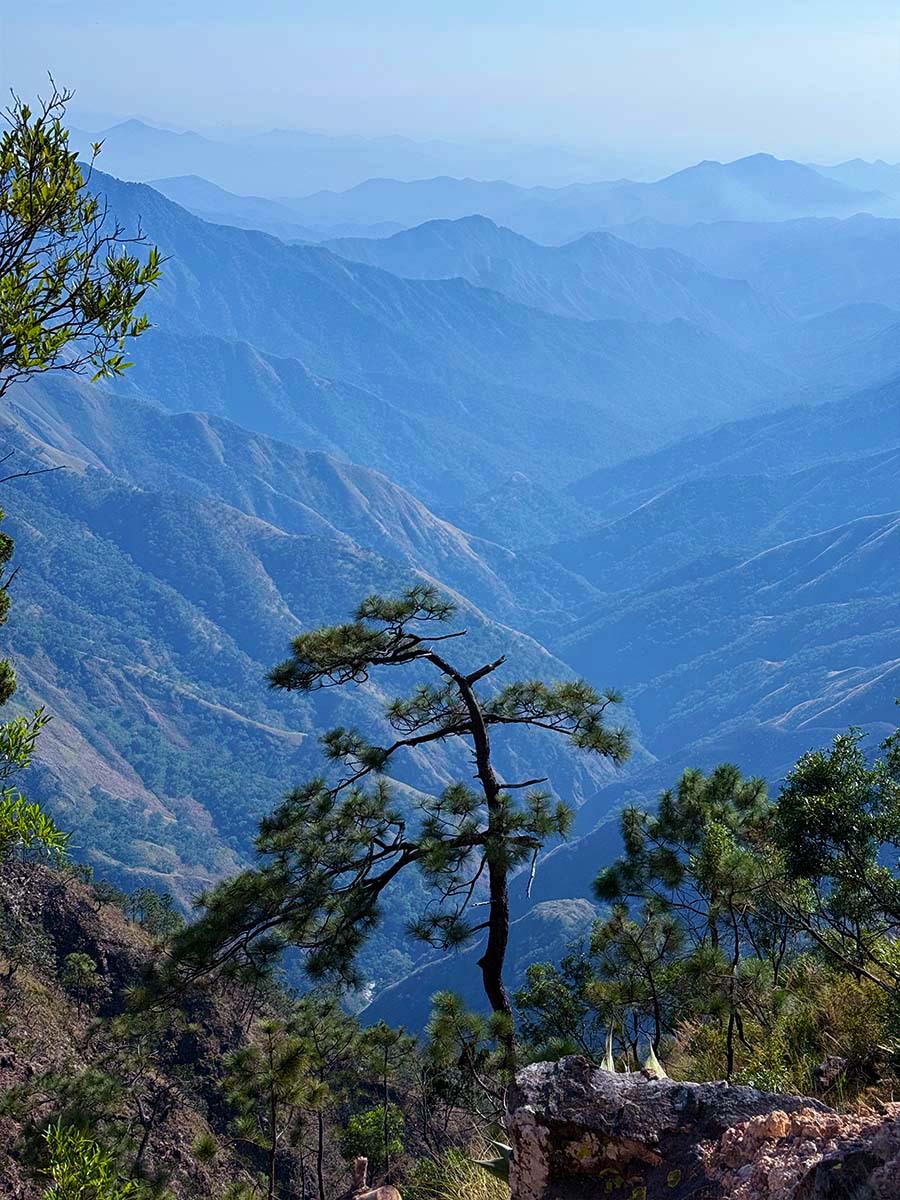
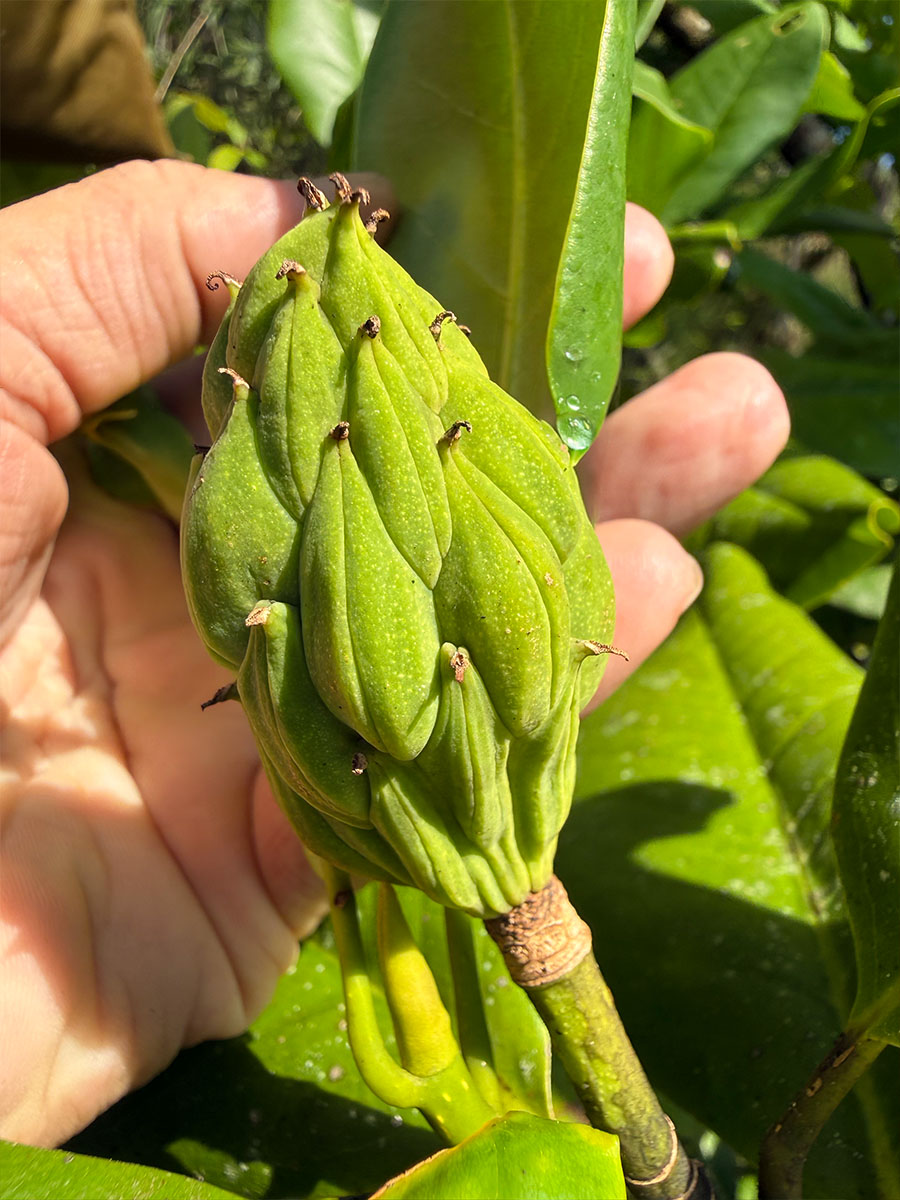
The Vallarta Botanical Gardens is located in the Los Horcones River basin, one of the last untouched wilderness areas in Mexico. Much of the land today is undeveloped and even unexplored by western science, and it supports a rich and globally unique biodiversity: otters, Military Green Macaws, native felines, and thousands of endemic plant species such as the rare Magnolia vallartensis and the aquatic plant Marathrum rubrum all make the area their home.
The region intersects two officially listed Key Biodiversity Areas (as per the World Database) as well as the Mexican Priority Terrestrial Region No. 63 of the Western Coast–Sierra bioregion and the newly designated Sierra Cuale Hydrological Protected Area of Jalisco. Recognizing our unique responsibility as the only environmentally dedicated non-profit in the river basin, VBG looks beyond our grounds toward protecting biodiversity in the wider region.
However, exploding tourism to the region, climate change, and general economic pressures are coming together to put those habitats at risk. Wildfires, uncontrolled deforestation and construction, and illegal extraction and poaching of endangered flora and fauna, especially orchids and parrots, have all increased in recent years, and the unique biodiversity of the region is at risk of being wiped out.
We can conserve the natural habitats and ecosystems of thousands of endemic species, many of them rare and endangered, by purchasing lots of still undeveloped land and working to certify them legally as protected areas.
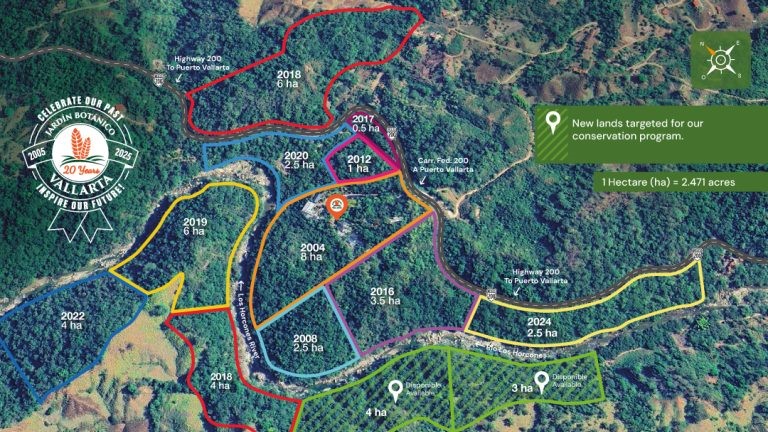
In 2010, the Botanical Gardens was registered as a Wildlife Conservation Management Unit with the Mexican Ministry of Environment and Natural Resources. Since then, thanks to philanthropic support, we have been able to acquire and protect a full 120 hectares of forest land in the river basin, of which 32 of them have been certified as protected natural areas by the Government of the State of Jalisco (Certificate AEDVC-002-2023). We are working now to secure legal status for the remaining hectares.
Today we monitor and manage these lands as sanctuaries dedicated to emblematic fauna, where phototrapping is carried out for their monitoring and protection, such as the “Santuario de los Chonchos” (Penelope purpurascens) with an area of 3 hectares within the perimeter of the Vallarta Botanical Gardens and the “Ocelot Sanctuary” (Leopardus pardalis) with an area of 71.4 hectares on land adjacent to the Gardens.
Conservation in Action is the only land conservation program in this region. Leave your mark on the future. With large gifts we are able to identify new tracts of land to purchase and preserve in your name. Gifts of any size help us maintain the lands, allowing us to invest thorough monitoring to prevent illegal incursion, poaching, and deforestation and to undertake full surveys of their biodiversity, population health, and ecosystem services.
Water Conservation and Policy Engagement
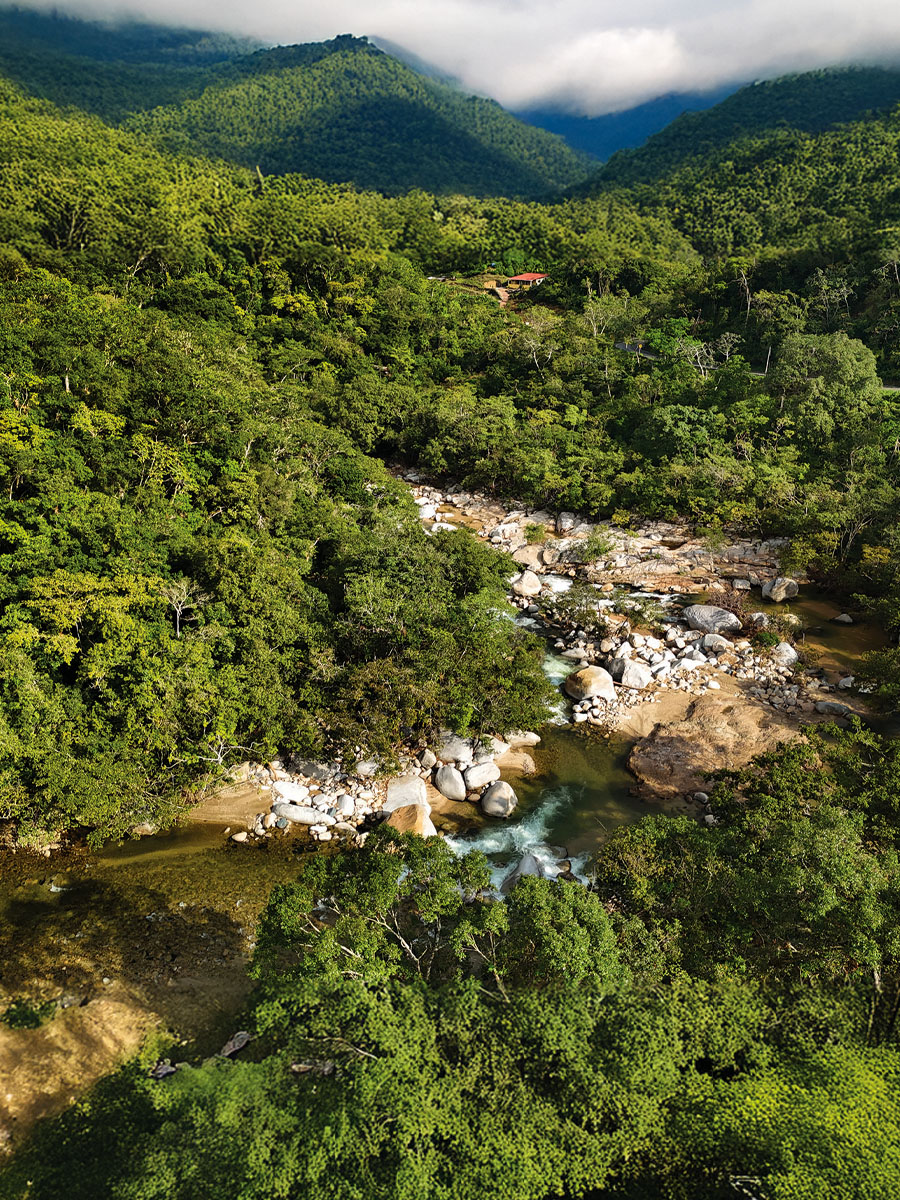
The Los Horcones River beautifies the landscape surrounding the Vallarta Botanical Gardens and makes possible the unique biodiversity found within its basin.
Running from the mountains of the Sierra El Cuale (over 2,300m altitude) to its mouth in the Pacific Ocean at Boca de Tomatlán, for most of its course the river flows through vast stretches of intact forest (from pine-oak forest at higher altitudes transitioning to tropical dry forest at lower elevations), along a canyon with steep granite walls.
In 2019 the very existence of the river itself was threatened by an illegal hydroelectric project which would have expropriated the river’s water and destroyed the habitats it supports. This project was only stopped thanks to community mobilization and outcry supported by researchers and non-profit organizations.
The Vallarta Botanical Gardens has collaborated on technical studies seeking federal designation of the river basin as a protected area and is participating in the current State Council on Protected Natural Areas and Other Conservation Instruments of Jalisco, which is assessing our proposal to create the Los Horcones River Basin Protected Natural Area. We have also supported the inclusion of municipal Participatory Ecological Zoning in public policy development processes, and measures for zoning enforcement, funding and monitoring.
Finally, since 2020 we have co-hosted a locally-organized annual music festival that has served to educate, raise funds, and defend the watershed.
Despite some successes, the Los Horcones River is still under threat from development – you can help by signing the petition below!
Biodiversity Monitoring and Native Species Reintroduction
In 2008, the Vallarta Botanical Gardens, together with researchers from the University of Guadalajara, conducted the first-ever scientific inventory of orchids in the Los Horcones River Basin, in which 50 distinct native species were documented.
Ever since, we have continued our work documenting and raising awareness about the unique biodiversity of the region. We maintain camera traps for wildlife on many of our forested properties, and have spotted ocelots, jaguares, and many more.
We are currently partnering with the local communities of El Tuito, Cabo Corrientes, and El Cuale in Talpa de Allende to develop the first-ever propagation protocols for endemic species, with the goal of producing more of certain rare plants for reforestation and habitat restoration projects in the region.
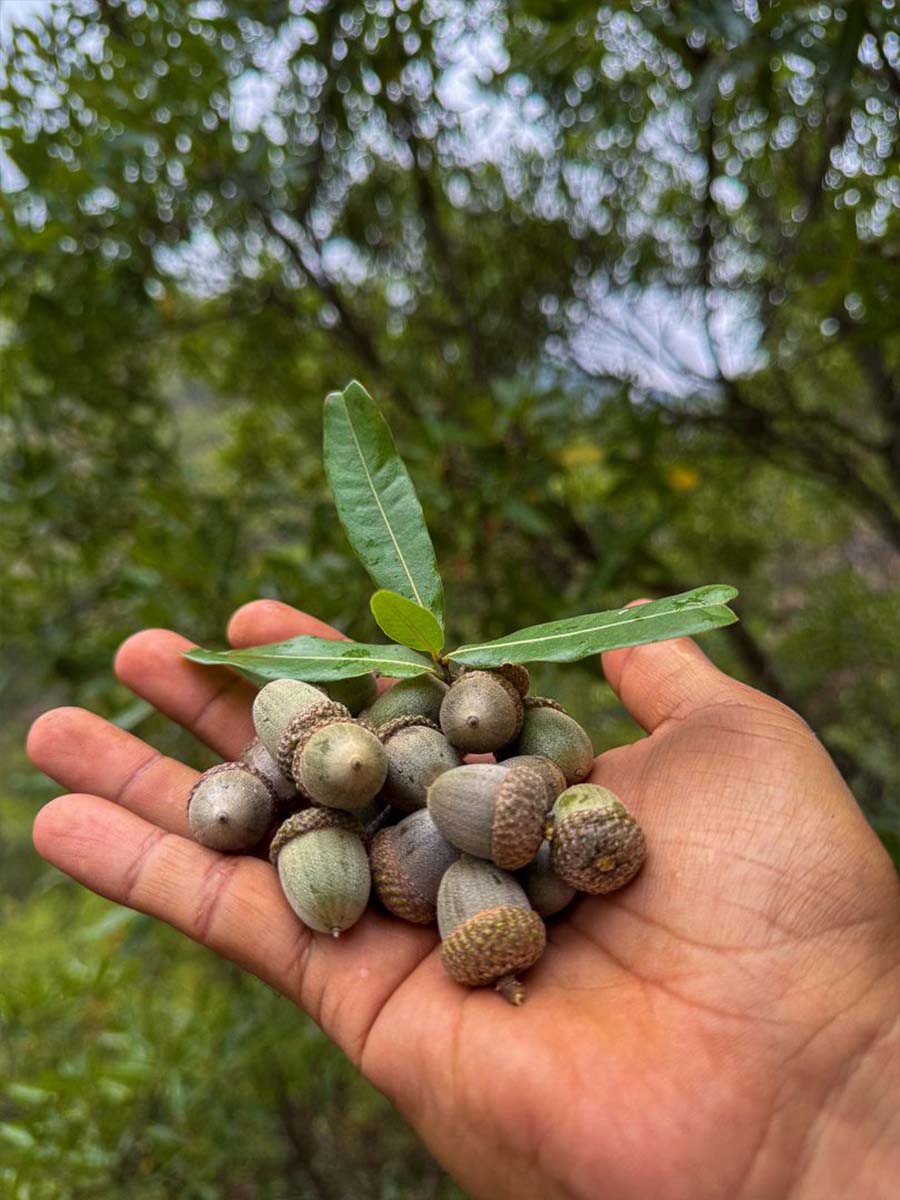
In particular we are currently focused on the rare native tree species of Magnolia vallartensis, Pinus vallartensis, Quercus cualensis, and Quercus tuitensis, and have been recognized for this work by international organizations such as ArbNet-BGCI in 2023, the International Oak Society in 2024, and the Franklinia Foundation in 2025.
We also promote growth in bird populations, for example the Green Military Macaw (Ara militaris). Through the installation of more than 15 artificial nests in conservation areas, we saw the first Military Macaw born at VBG fly away to the wild in 2019.
Facilitating Global Science
Much needed research into the ecosystems of the region of Puerto Vallarta and Cabo Corrientes is still to be done. As the only organization dedicated to environmental conservation in the region, the Vallarta Botanical Gardens is the sole local convener and most important scientific outpost for global research.
We conduct extensive fieldwork and maintain relationships and formal partnerships with universities, arboretums, government institutions, and private and non-profit researchers. Together with these partners we carry out botanical surveys to learn about the composition and distribution of plant species in the Los Horcones River Basin.
Our work has resulted in the identification of species previously unknown to Western science, like Polystemma horconesense, a climbing vine found in the Gardens which we documented and registered, naming it after the Los Horcones river.
We also regularly document new population clusters of very rare or endangered native plants and have registered several hundred new records for the scientific collection of the PV Herbarium at the Centro Universitario de la Costa, University of Guadalajara. Some of these have never before been documented or digitized in the collections of the Herbarium Network, such as the trees Magnolia vallartensis, and Pinus vallartensis, while other species had not been collected in this area for decades if not centuries, such as Mexianthus mexicanus, a unique flower in the sunflower family.
The development of the Floristic List of the Vallarta Botanical Gardens is underway and will soon be published, followed by that of the Los Horcones River Basin.
Among the research we would like to carry out in the future is the monitoring of changes in plant and animal populations in response to climate change or other disturbances, the results of which serve as a basis for decisions on land management and other conservation initiatives – your donations make it possible!
 English
  Spanish