Living Plant Collections
We are a living museum, showcasing, propagating, and investigating diverse endemic and exotic species, including rare and threatened plants
Our Plant Collections by the numbers:
Some of our current projects in this area include:
Your 2026 donations to our Living Plant Collections program area will support investments including:
- Maintaining our Gardens and providing living wages for all staff
- Upgrading our propagation lab including a new air filter
- Expanding our greenhouse capacity and improving our equipment
- New tools like a backhoe to reduce manual labor requirements and speed up the work
- Participation in scientific collaborations and meta-collections
Link above is for tax-deductible donations in the USA. For other geographies or any questions related to our impact work and philanthropic opportunities, please contact our Head of Fundraising, Christopher Jacobs, by email at christopherj@vbgardens.org
Our Curated Gardens
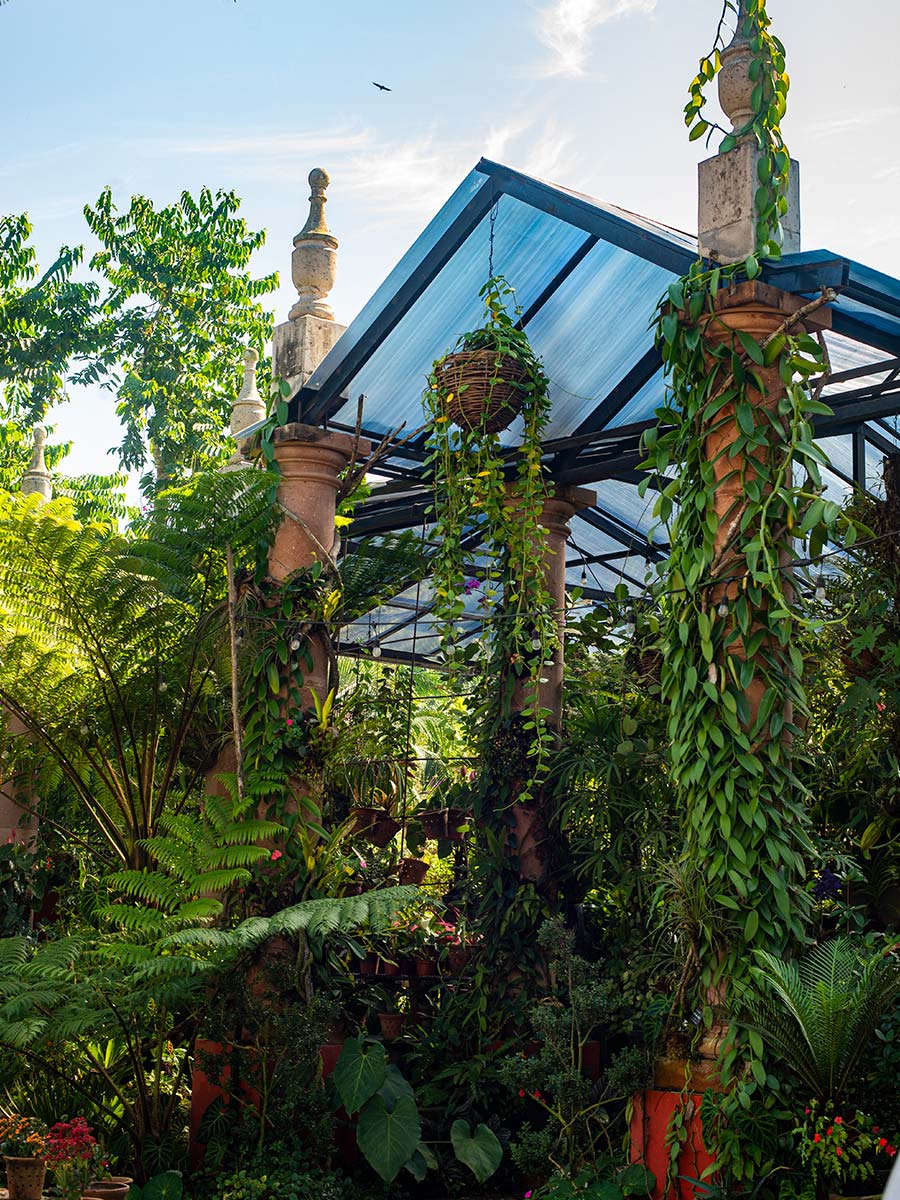
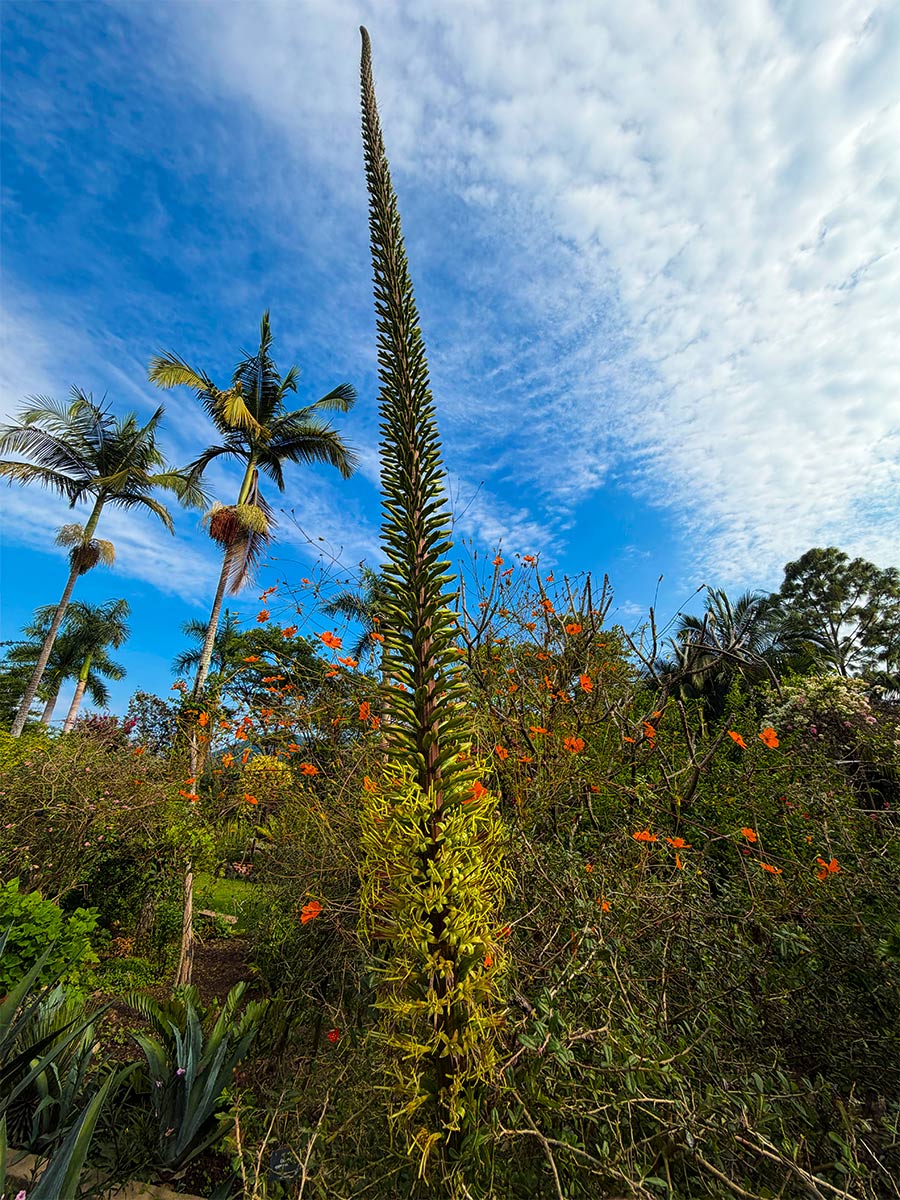
Living plant collections are the heart of any botanical garden. The Vallarta Botanical Gardens is home to over 1,200 species of plants and hybrids.
From the beginning, the ecological restoration of the area has been a priority, since previously these lands were used as pastures and agave cultivation fields, however now it is covered with lush vegetation that
Over the last 20 years years, the Vallarta Botanical Garden has become an important conservation and environmental education center in Western Mexico that currently protects at least 60 species listed as “at risk” by Mexican authorities and over 250 species which are marked as threatened on the Red List of the International Union for Conservation of Nature. We also house 30 species endemic to the state of Jalisco, representing approximately 10% of the state’s endemic species.
One of our most important collections is orchids, and we cultivate more than 130 orchid species from nearly 70 genera. Three-quarters are native to Mexico, and the rest are exotic and hybrids of ornamental interest.
Conservation and sustainability are at the heart of our operations, and we use only organic natural fertilizers, compost all organic residues, manage our water usage carefully, and ensure that our Gardens offer a vibrant sanctuary for diverse pollinators and birds, both local and migratory.
Some of the species that are particularly emblematic of our garden include:
- Vanilla orchids Vainilla planifolia
- West Indian birch or “papelillo” trees Bursera simaruba
- Royal Palm trees Roystonea regia
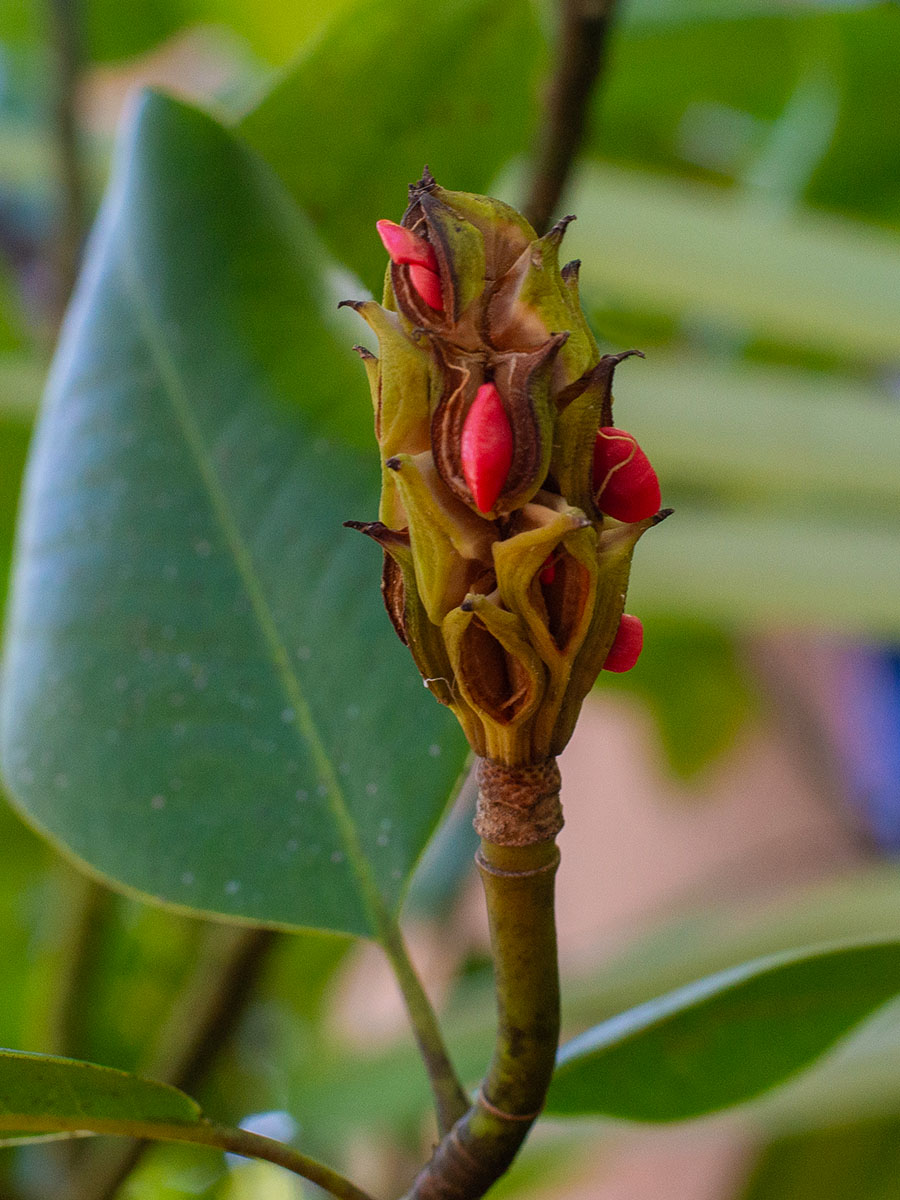
- A rare endemic species of Magnolia Magnolia vallartensis
- The bromeliad Tillandsia jaliscomonticola, whose bloom features in our logo
Certified & Scientific Collections
While Vallarta Botanical Gardens cultivates and displays thousands of plants and flowers throughout the year, our formal, scientific collections focus on Oak, Magnolia, Palm, Agave, Cycad and Orchid species. Today, we are home to two of the most important native tree plantations in Mexico, our Oak and our Magnolia collections.
Excitingly, in 2025 we received ArbNet Level 2 accreditation, in recognition of our work. The ArbNet “Arboretum Accreditation Program” is the only international program of accreditation specific to arboreta. It maintains a widely recognized set of industry standards for the purpose of unifying the arboretum community, and our advance from Level 1 to Level 2 reflects the growing sophistication and importance of our work conserving trees.
The VBG Mexican Magnolias Collection is nine years old and consists of about 130 specimens of ten species and is recognized as a Nationally Accredited Collection by the APGA, while our Mexican Oak Collections is more than 18 years old and consists of more than 100 specimens of at least 12 native species and 26 species in total. In fact, Mexico is the country in the world with the greatest number of different oak species. Over 160 species of oak trees are found here, and 109 are recognized as endemic.
We also maintain a collection of 22 agave species and 30 palm species. This last collection has grown the most, as thanks to our agreement with the Culiacán Botanical Garden, we have received a selection of plants from its National Palm Collection.
Currently, the VBG keeps working on the propagation programs to exchange trees with other gardens and translate these conservation efforts into our environmental educational programs.
These projects of scientific collections have been achieved thanks to the work in collaboration with the Botanical Gardens Conservation International, the ArbNet Global Interactive Community of Arboreta, and universities like the University of Guadalajara, the Botanical Garden of the Benemerita Universidad Autónoma de Puebla and other botanical gardens.
Magnolia Collection:
- M. dealbata
- M. iltisiana
- M. jaliscana
- M. montebelloensis
- M. ofeliae
- M. pacifica
- M. pugana
- M. tarahumara
- M. vallartensis
- M. yoroconte
Magnolias
Quercus Collection:
- Q. acherdophylla
- Q. acutifolia
- Q. aristata
- Q. castanea
- Q. centenaria
- Q. coccolobifolia
- Q. cualensis
- Q. elliptica
- Q. glaucescens
- Q. iltisii
- Q. insignis
- Q. magnoliifolia
- Q. rugosa
- Q. tuitensis
Oaks
Propagation Lab & Greenhouses
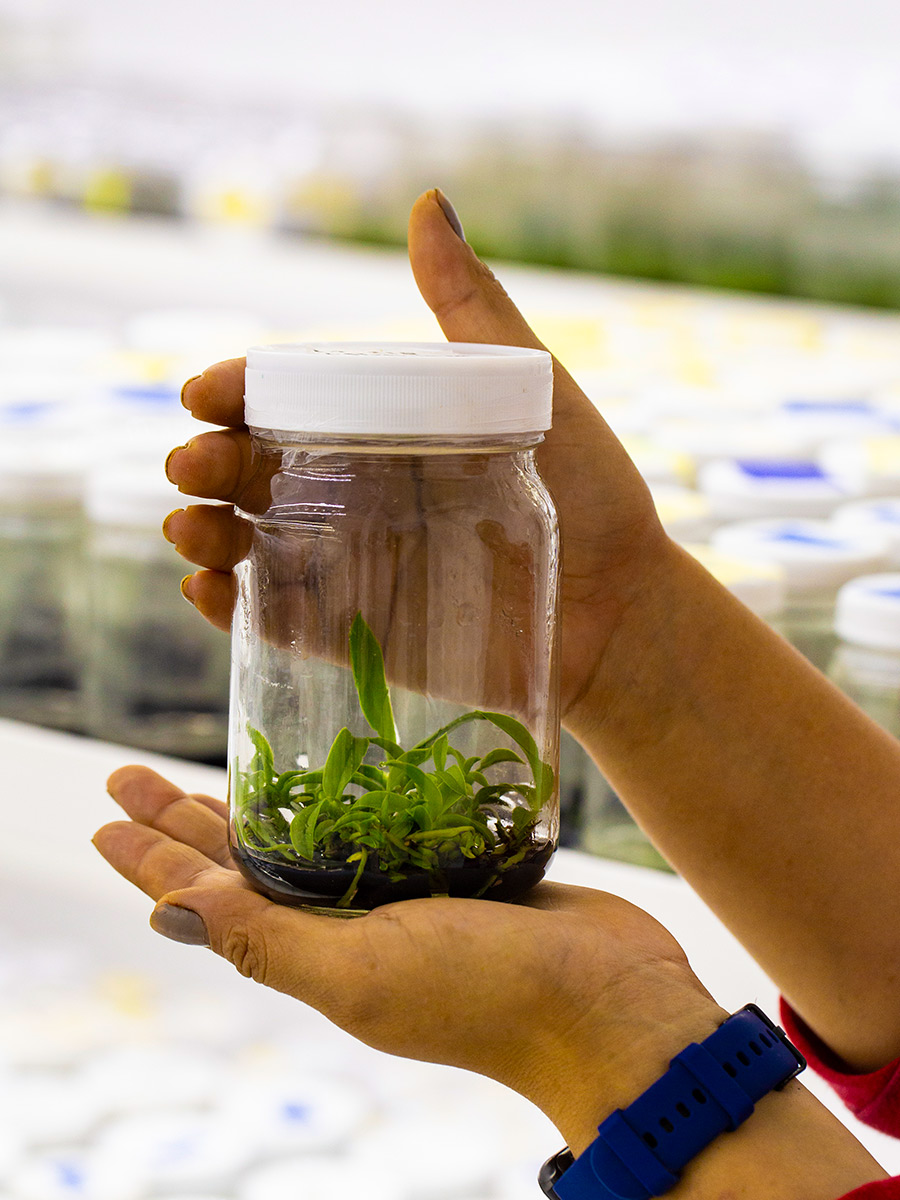
All the way back in 2010, with just a shoestring budget, the Gardens started an experimental micropropagation laboratory, with the purpose of reproducing native and ornamental species, mainly orchids, for their ex situ conservation (meaning protection here within the Gardens’ grounds).
Eight years later, in 2018, we were able to upgrade our facilities into a more modern laboratory and acquire specialized equipment for in vitro orchid culture. Currently
This labor of love means that today VBG is leader in the propagation and cultivation of native Mexican orchids, and in 2023 we won the Leon Levy grant from the Global Botanic Garden Found BGCI to support “In vitro propagation of four Encyclia species native to western Mexico.”
In 2024, we were again able to expand and construct two onsite greenhouses where we are able to propagate Mexican native plants for use not only in our Gardens, for sale in our nursery, but also for exchange with other institutions, and for repopulation into the wild.
We acquire plants in our collections that are not often available in horticultural trade, through plant exploration in the field or exchange with other gardens. In many case, no documented propagation method exists for the rare native plants of this regions, so we research how to propagate and maintain them, creating knowledge that can be shared worldwide and support the conservation of these species.
Horticultural Research and Contributions to Science
Development of the first-ever propagation methods for native plants of western Mexico in our greenhouses and laboratory is but one way the Vallarta Botanical Gardens contributes to horticulture research and global botanical science.
As we curate and maintain our plant collections for the enjoyment of all our visitors, we are simultaneously identifying and refining sustainable horticultural practices such as integrated pest management and use of plants with pest and disease resistance, use of drought tolerant plants for reduced water use, use of climate-adapted plants, use of plants attractive to native wildlife, etc.
Additionally, the exchange of plant material and data is essential to support collaborative research and sustainable development. VBG participates in meta-collections including Magnolias (GCCO-BGCI), Oaks (GCCM-BGCI) and Palms (National Collection-AMJB), and exchanges plant materials with universities across Mexico: UNAM and UdeG.
We also work with other botanical gardens and herbaria to document our plants and register them formally with global science. We have inserted more than 100 native species into the PV herbarium, representing the first time many of these plants were documented anywhere.
We even discovered a completely new species of vine here last year, Polystemma horconesense, and had it registered and recognized by science as a new plant. Named after the Los Horcones river, more than 300 of these rare plants are now growing in our greenhouse.
 English
  Spanish